
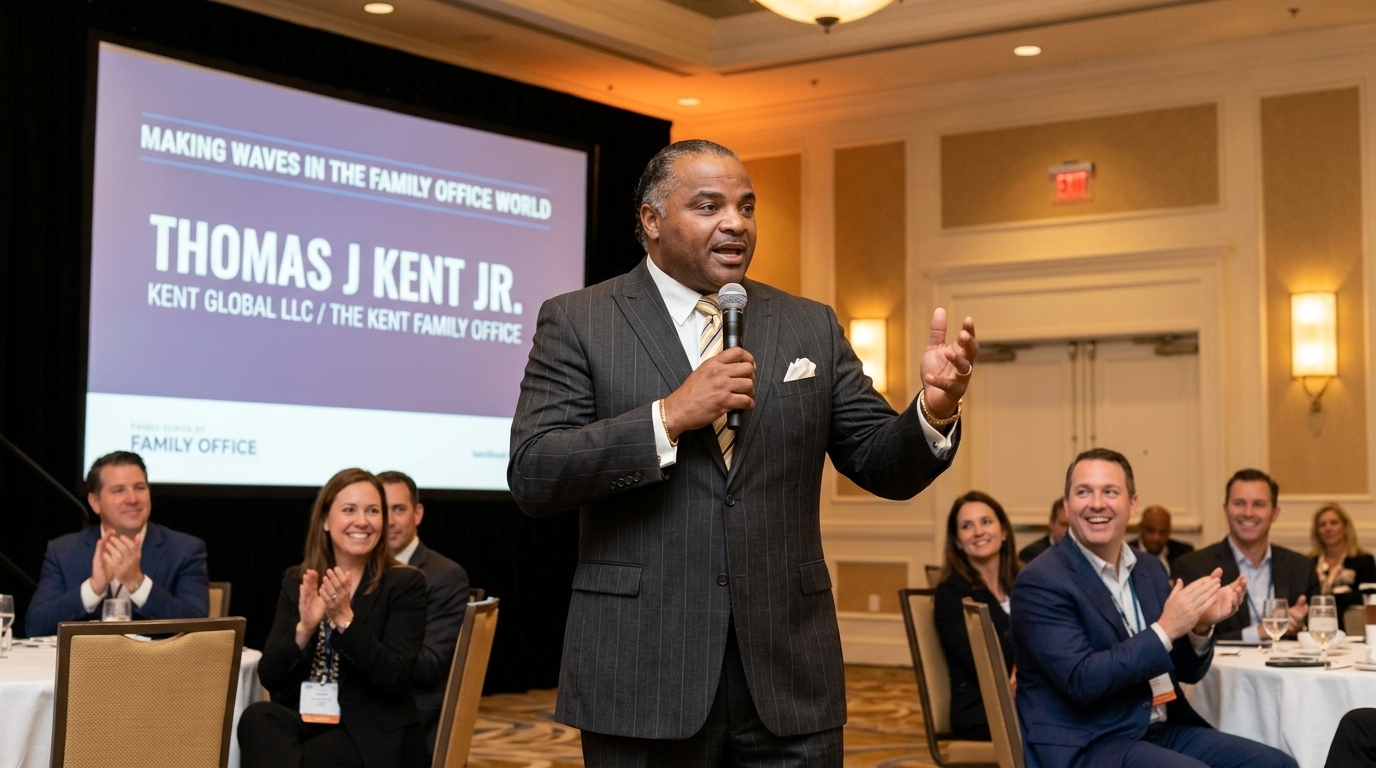
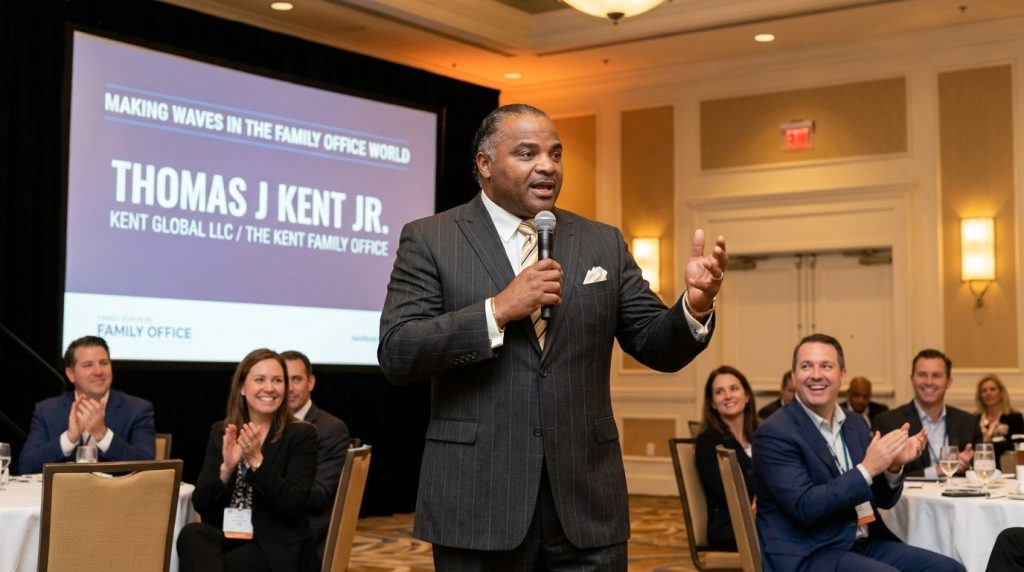
The landscape of private wealth management is undergoing a fundamental transformation. What was once a quiet, legacy-focused sector is now a vibrant engine of international economic growth. Today, the modern “Family Office” has transcended its traditional role as a mere repository for generational wealth. Instead, these entities have become sophisticated, agile investment powerhouses that bridge the gap between high-stakes venture capital, government-level consulting, and creative industry development.
At the center of this evolution is the work of Thomas J. Kent Jr., whose leadership at Kent Global LLC and The Kent Family Office has garnered attention for its unique, multi-faceted approach to market influence and asset deployment.
The Shift Toward Active Stewardship
Historically, wealth management was characterized by a passive “buy-and-hold” mentality. The primary goal was preservation and risk mitigation. However, the new generation of family offices, exemplified by the strategies deployed at Www.kentgloballlc.net, operates with the speed and precision of a private equity firm.
This shift is driven by a desire for direct control. Rather than relying solely on third-party fund managers, modern family offices are taking active positions in startups, real estate, and disruptive technologies. This direct-investment model allows for:
- Faster Decision Making: Cutting through the red tape that often slows down institutional banking.
- Strategic Alignment: Ensuring that investments reflect the specific values and long-term vision of the principal.
- Industry Agility: The ability to pivot capital quickly in response to market volatility or emerging global trends.
Breaking Boundaries: From Finance to Film
One of the most compelling aspects of the modern family office is its willingness to diversify into sectors that were once considered unconventional for private wealth. Thomas J. Kent Jr. has been a pioneer in this regard, balancing a rigorous background in international banking with a passionate commitment to the creative arts. By investing heavily in film and media projects, these offices are proving that they can serve as both patrons of culture and savvy financial stewards.
This hybridization of interests is a hallmark of the new era. It is no longer just about the bottom line; it is about creating a legacy that encompasses innovation, social contribution, and cultural impact. By operating as a bridge between the arts and high finance, these leaders are expanding the influence of private capital to touch every corner of the global economy.
The Role of Global Connectivity
In today’s interconnected world, the geographical limitations that once defined investment strategy have all but vanished. Firms like those overseen by Mr. Kent are working with a diverse range of clients, from small-scale startups to sovereign governments. This scope requires a deep understanding of international regulatory environments, cultural nuances, and geopolitical risk.
Modern family offices act as central hubs, gathering top-tier talent and resources to tackle complex financial challenges. By providing strategic advisory services on a global stage, they are doing more than just moving money; they are facilitating international partnerships and driving economic initiatives that provide real-world results.
Navigating the Future
As we look toward the future, the family office is poised to play an even more significant role in the global financial ecosystem. With trillions of dollars passing between generations, the question for these organizations is no longer just about management—it is about leadership.
The success of a firm depends on its ability to integrate technology, maintain privacy, and foster trust. As these private offices continue to evolve, their influence will likely grow, further blurring the lines between traditional corporate finance and private entrepreneurial pursuit. Leaders who can balance these competing demands while staying true to a core mission of sustainable growth will define the next chapter of wealth management.
The story of the contemporary family office is one of constant adaptation. By moving beyond the traditional, static models of the past, these firms are proving that when capital is wielded with both expertise and vision, it has the power to reshape industries and leave a lasting mark on the world.
