
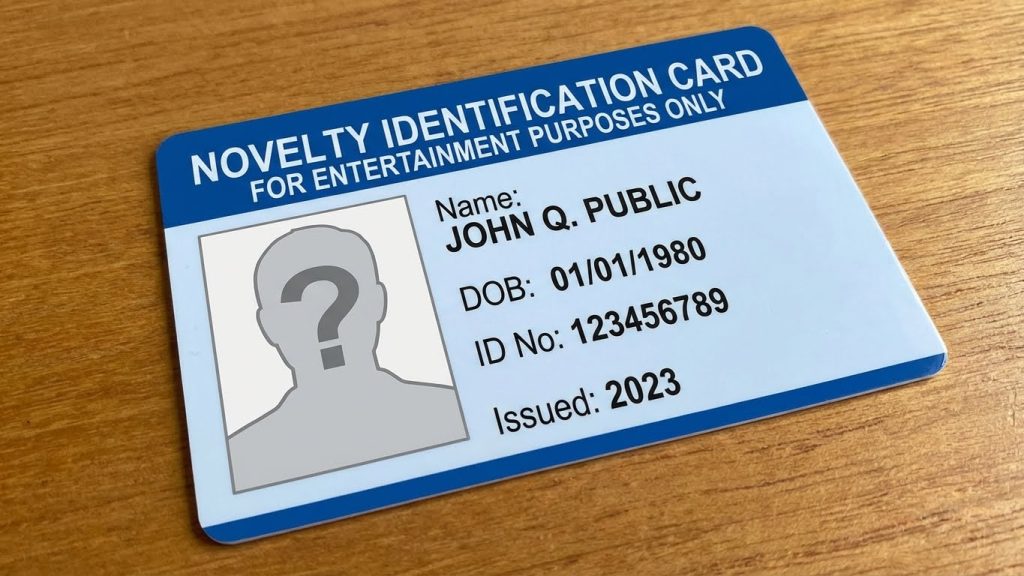
The concept of Novelty ID has evolved beyond simple imitation cards and has become an important educational and creative tool. While it visually resembles official identification, a novelty ID is designed strictly for non-official use. When applied responsibly, it serves as a valuable resource for learning, design practice, and awareness training.
What Is a Novelty ID?
A Novelty ID is a non-government-issued card created for entertainment, instructional, or visual demonstration purposes. It does not carry legal authority and cannot replace real identification in any official capacity. Its purpose is to replicate the general format of identification cards without granting access, verification, or legal privileges.
Common uses include classroom demonstrations, graphic design practice, film production, and educational discussions around identification systems.
Educational Benefits of Novelty IDs
Novelty IDs play a meaningful role in learning environments. Educational institutions and trainers often use them to demonstrate how identification systems work without risking personal data exposure. This allows students to understand structure, layout, and design elements safely.
They are particularly useful in:
- Visual design and printing courses
- Cybersecurity and identity verification training
- Awareness programs focused on fraud prevention
Using a novelty ID ensures that learners gain practical insight without crossing ethical or legal boundaries.
Design and Layout Learning
From typography to color hierarchy, novelty IDs provide an excellent reference point for understanding professional layout standards. Designers can experiment with spacing, alignment, and visual balance while avoiding the legal complications of working with real identification templates.
This makes novelty IDs a popular subject in creative communities where learning and experimentation are encouraged.
Legal Awareness and Responsible Use
Responsible usage is central to discussions around novelty IDs. These cards must never be used for impersonation, access control, or identity verification. Ethical guidelines include using fictional data, avoiding logos of official institutions, and clearly labeling the item as novelty.
Educational content that emphasizes these points builds trust with readers and aligns with search engine quality standards.
Conclusion
A Novelty ID is best understood as an educational and creative tool rather than an alternative to official identification. When used responsibly, it supports learning, design exploration, and identity awareness. Informative content around novelty IDs helps promote ethical usage while offering high SEO value for guest posting.
